

For Albanians, the question is not small. It is not a niche academic debate buried in dusty archives. It is a question of origin, memory, and continuity: who were our ancestors, and how far back does the Albanian story go?
For generations, one answer has stood above the rest: Albanians are the descendants of the ancient Illyrians.
That idea has been challenged, questioned, and politicized from many directions. Yet despite all the noise, one fact remains hard to ignore: Albanians are one of the oldest native peoples of the western Balkans, and the case for Illyrian continuity has never disappeared because it rests on more than emotion. It rests on geography, language, historical memory, and long-standing continuity in the very lands where Albanians still live today.
So is the Illyrian origin of Albanians a myth?
For many Albanians, the answer is simple: no, it is historical truth.
The people who never disappeared
The ancient Illyrians were an Indo-European people who inhabited a vast part of the western Balkans, stretching across lands that include present-day Albania and neighboring regions. Ancient writers referred to Illyrian tribes across this space long before the arrival of later populations that reshaped much of the peninsula.
What matters here is not just that the Illyrians existed, but where they existed.
The Albanian people did not appear out of nowhere. They emerged historically in the same broader western Balkan zone that had long been associated with Illyrian populations. Britannica notes that the ethnonym Albanoi was mentioned by Ptolemy in the 2nd century CE for a tribe living in what is now central Albania, and that this name later spread more widely. That matters because it places an early Albanian-linked name directly inside the historical geography of Illyria.
In plain terms, the argument is straightforward: the people remained in the land, the name survived in the land, and the language endured in the land.
That is not the profile of a population with shallow roots. That is the profile of continuity.
The Albanian language is the strongest witness
If there is one reason the Albanian case remains powerful, it is the language itself.
Albanian is not Slavic. It is not Greek. It is not Latin. It is a separate branch of the Indo-European family and the only surviving modern representative of that branch. Britannica explicitly describes Albanian as a descendant of the extinct Illyrian tongue, while also noting that Albanian preserves a highly distinct historical identity within Indo-European.
That point is huge.
Languages do not survive by accident. A language like Albanian, with its own branch and deep roots in the Balkans, points to an old population that remained present despite Roman rule, Byzantine influence, Slavic migrations, and Ottoman centuries. Albania’s linguistic history is not the story of a recent arrival. It is the story of endurance. Britannica’s history of Albania also notes that Illyrian culture survived and that the Illyrian tongue continued, even as Latin words entered the language over time.
So when Albanians say their language carries the voice of ancient Balkan ancestry, they are not speaking only in patriotic poetry. They are pointing to one of the clearest markers of continuity a people can have.
Why the Illyrian link matters so much
The Illyrian argument is not simply about claiming an ancient name. It is about recognizing that Albanians are not a late or imported people in their own lands.
In a region where history has often been rewritten by empires, occupations, and competing national narratives, the survival of the Albanian people stands out. The language survived. The ethnonym survived in evolving form. The population remained rooted in the western Balkans. Britannica’s entry on Albanian people states that Albanians are native to the Balkans and are historically believed to have descended from the ancient Illyrians.
That is why the Illyrian question is not only about the distant past. It is also about historical legitimacy. It explains why Albanians do not see themselves as newcomers to the region, but as one of its oldest living peoples.
And that view is not some modern invention. It is tied to long-standing scholarly discussion, linguistic evidence, and the stubborn continuity of Albanian presence where ancient Illyrian populations once stood.
What about the arguments against it?
This is where the debate becomes noisy.
Some scholars have proposed other ancient Balkan links for Albanian, including Dacian or Thracian possibilities. Britannica notes that both Illyrian and Dacian have been considered as possible ancestors or nearest relatives of Albanian.
But for many Albanians, and for many historical narratives centered on the western Balkans, the Illyrian connection remains the most convincing because it fits the basic line of continuity far more naturally: same region, enduring population, surviving language, ancient name attested in central Albania.
It is also worth saying plainly that debates about Albanian origins have often gone far beyond scholarship. In the Balkans, history is rarely just history. It becomes politics, identity, and sometimes denial. That is exactly why this topic still provokes such strong feelings.
But even when stripped of politics, the Albanian case remains strong. It does not depend on fantasy. It depends on continuity.
Genetics has added another layer
In recent years, genetic research has added more depth to the conversation.
A 2025 version of the study Ancient DNA reveals the origins of the Albanians reports that modern Albanians descend largely from Roman-era western Balkan populations, with additional later admixture from Slavic-related groups. The same line of research points to notable continuity in the region rather than a wholesale replacement of population.
Genetics cannot by itself label ancient people with perfect ethnic names, and it should not be oversold. But it does reinforce an important point: the roots of Albanians in the western Balkans are deep, not recent. That supports the broader case that the Albanian ethnogenesis developed inside the region, not somewhere far away before arriving later.
For many readers, that matters because it aligns with what Albanian historical consciousness has long maintained: the people endured where they were.
More than survival
What makes the Albanian story remarkable is not just that the people survived, but how they survived.
Empires came and went. Borders shifted. Religions changed. Languages around Albania rose, spread, and pressed in from all sides. Yet Albanian remained Albanian. It absorbed influence, yes, but it did not disappear. That alone tells us something important: this was never a weak or temporary identity. It was resilient enough to pass from generation to generation through centuries of upheaval.
That is why the Illyrian question resonates so deeply. It is not only about archaeology or old tribal names. It is about the long thread of a people who stayed connected to their land, their speech, and their sense of themselves.
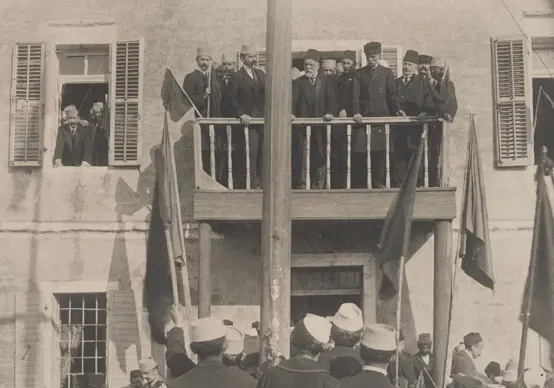
So, myth or truth?
For a confident reading of Albanian history, the answer is clear: the Illyrian roots of Albanians should be understood as historical truth grounded in continuity.
The lands match. The name appears early in central Albania. The language stands apart as ancient and native. Historical reference works connect Albanian with Illyrian descent, and modern genetic research supports deep western Balkan continuity.
No serious people need to apologize for saying Albanians are an ancient Balkan people. No one needs to shrink Albanian history to make it more acceptable to others. The Albanian presence in these lands is old, durable, and deeply rooted.
That is why the Illyrian legacy continues to matter.
Not because it is a slogan.
Because it is part of the historical spine of Albanian identity.
Final Thoughts
Albanians do not need invented grandeur. The truth is already powerful enough.
A people native to the western Balkans.
A language that survived when others vanished.
A name with ancient echoes in the same land.
A continuity that outlived empires.
Call it memory. Call it heritage. Call it history.
For Albanians, the Illyrian roots are not a passing myth. They are part of the oldest layer of the national story, and that story still lives.