

Drive through southern Albania near Përmet or Tepelenë and the Vjosa can look surprisingly different from one kilometre to the next.
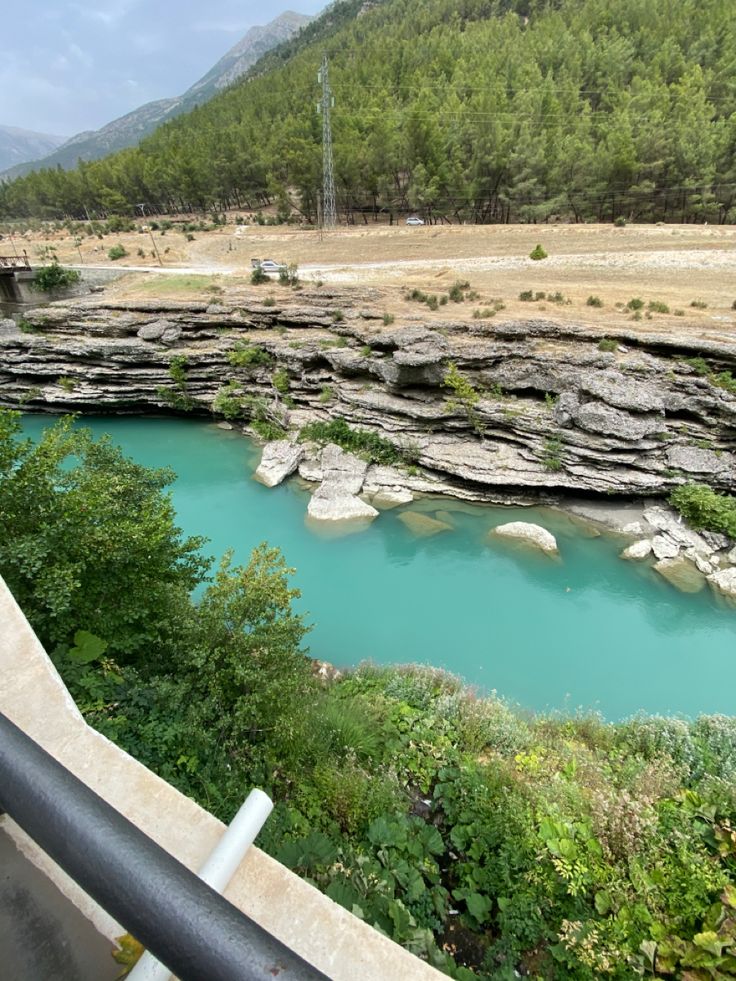
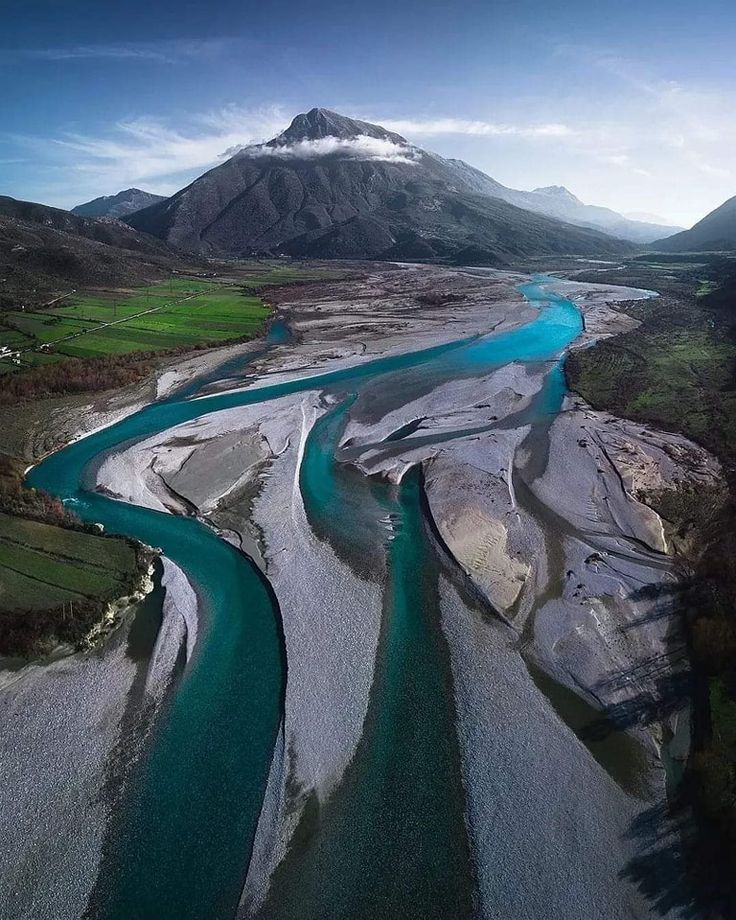
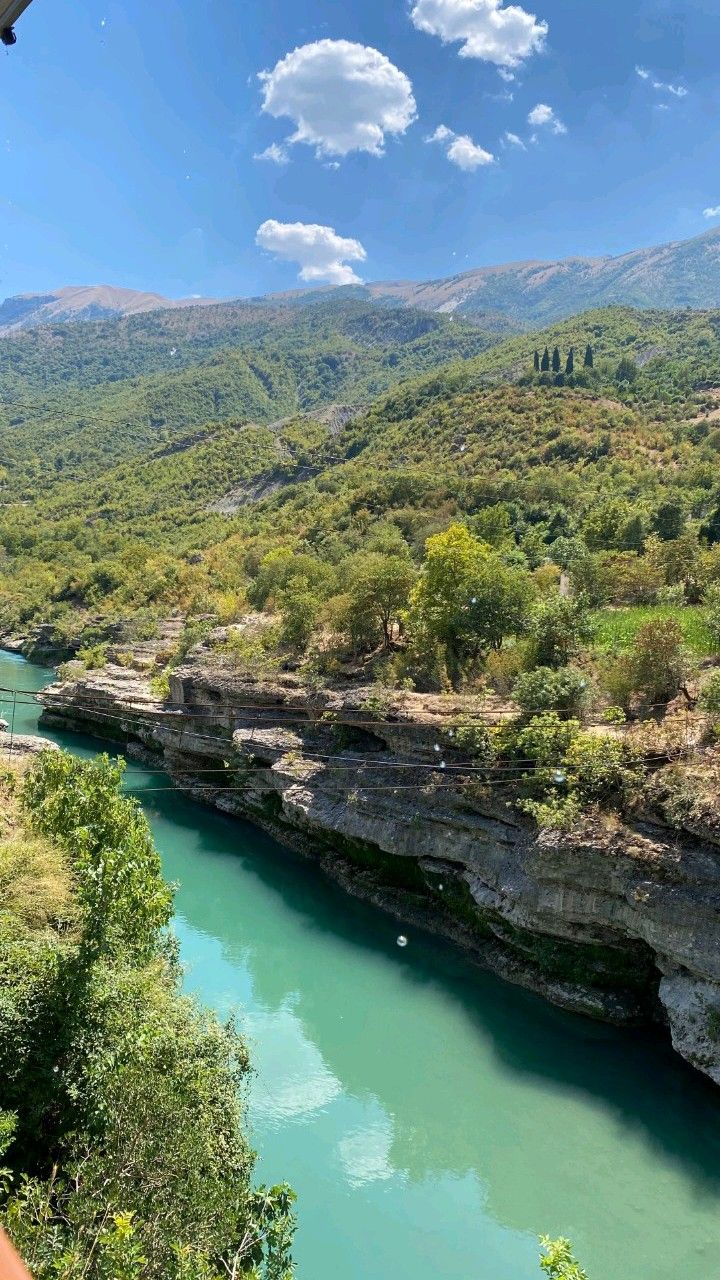
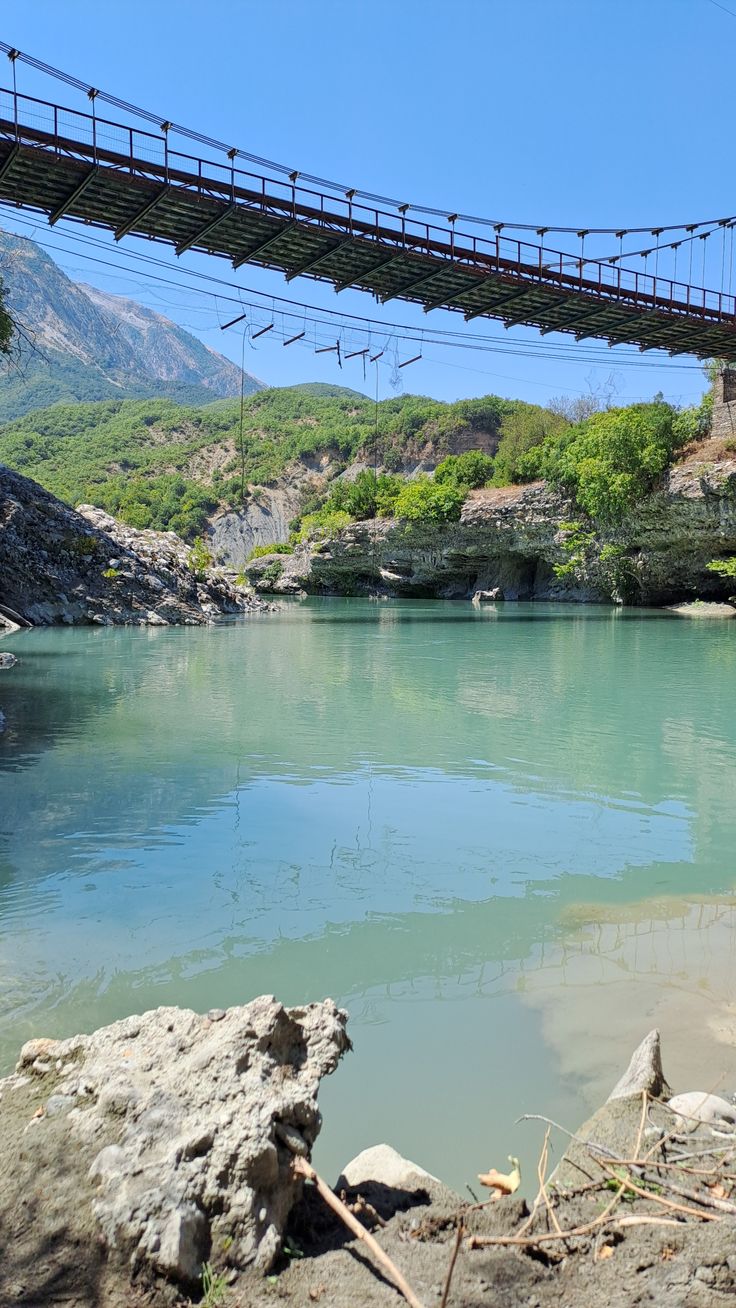
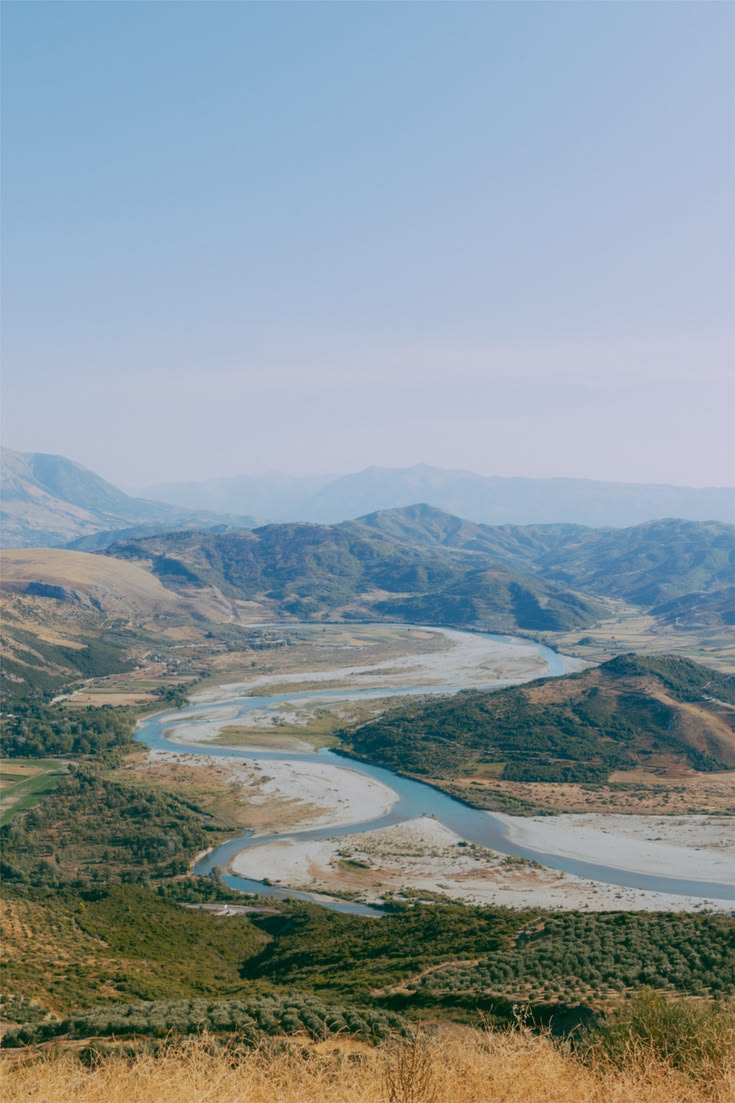
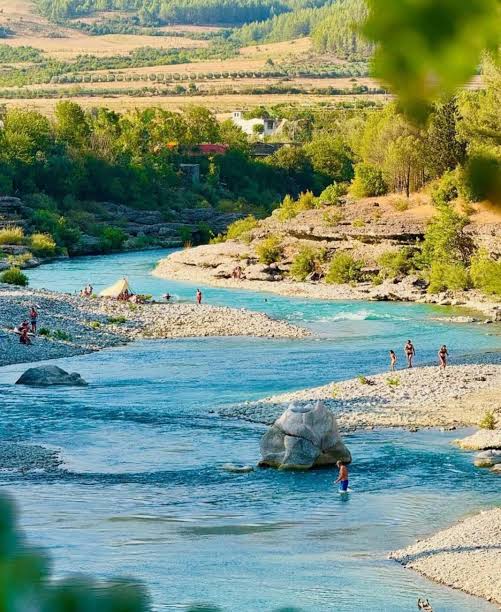
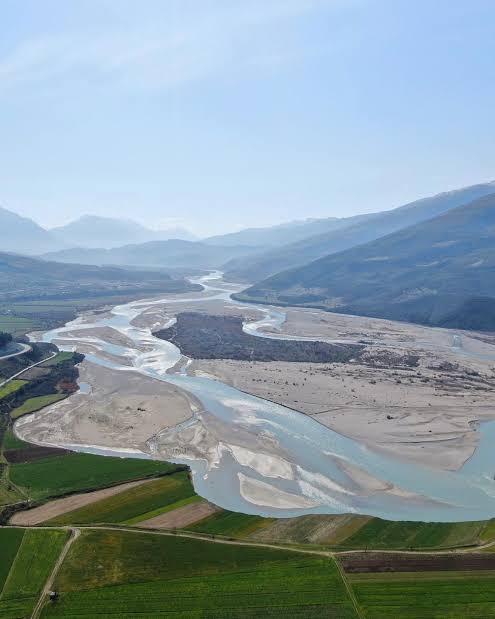
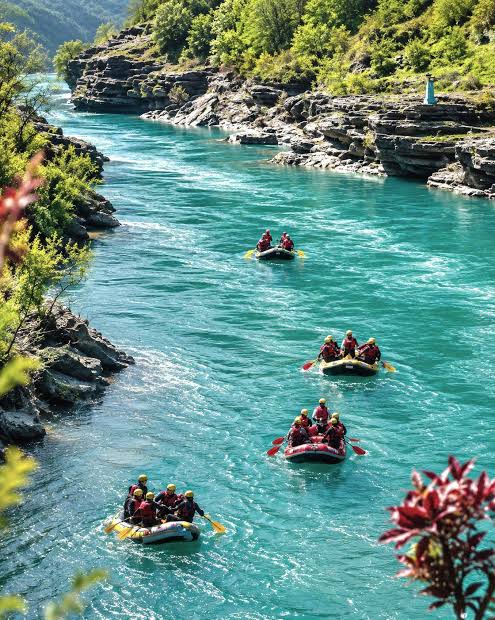
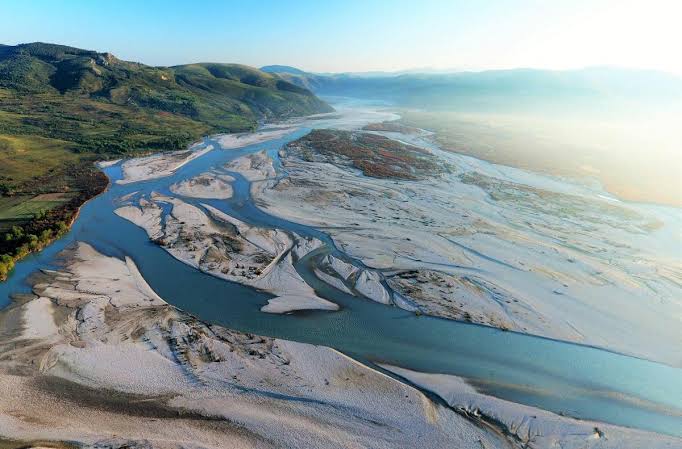
In one section, turquoise water moves between steep mountain walls. Further downstream, the river opens into a huge gravel bed and divides into several channels. Islands appear, disappear and change shape. After heavy rain, the water level and even parts of the river landscape can look different again.
That constant movement is important.
The Vjosa is frequently described as Europe’s last wild river. More precisely, conservation organisations such as IUCN describe it as one of Europe’s last great free-flowing river systems. In 2023, Albania gave the river an even more significant distinction by creating the Vjosa Wild River National Park, the first wild river national park in Europe.
But what actually makes a river “wild”?
The answer is much more interesting than simply saying that the water is clean or the scenery is beautiful.
First, What Does a Wild River Actually Mean?
A wild river is essentially a river that is still allowed to behave like a river.
Across much of Europe, large rivers have been changed dramatically over the past century. Dams regulate water flow. Concrete banks stop rivers from changing course. Channels are straightened to protect roads, farmland and towns. Water is diverted for irrigation, industry or electricity generation.
Those changes can be useful for people, but they also transform natural river ecosystems.
The Vjosa is unusual because long sections of the river and its tributaries remain free-flowing. Rather than being tightly controlled, water, gravel, sediment and nutrients continue moving naturally through the system.
IUCN describes the wider Aoos-Vjosa system as flowing for around 272 kilometres from the Pindus Mountains in Greece to the Adriatic Sea in Albania, with extensive free-flowing tributaries connected to it.
That freedom is the foundation for almost everything else that makes the Vjosa special.
A River That Is Constantly Rebuilding Itself
Look at an aerial photograph of the Vjosa and you will understand why scientists are so interested in it.
It does not always resemble the single blue line we imagine when thinking about a river.
In many places, the Vjosa spreads across a broad valley and splits into multiple channels. Between them are gravel bars, islands and exposed sections of riverbed.
These are known as braided river systems.
The channels can move as water levels rise and fall. Gravel is transported downstream. New banks form while others erode. Vegetation establishes itself on islands until changing conditions reshape them again.
UNESCO describes the Vjosa Valley as containing river channels, islands and floodplains that are continually reshaped by the river’s uninterrupted flow. These processes create habitats including braided channels, gravel bars, wetlands, riparian forests and coastal lagoons.
To a visitor, it simply creates an impressive landscape.
Ecologically, it is much more important.
A river that can change naturally creates many different habitats within the same system.
From the Mountains of Greece to the Adriatic
The Vjosa begins outside Albania.
Its headwaters rise in the Pindus Mountains of Greece, where the river is known as the Aoos. It then crosses into southeastern Albania before travelling through the country’s south towards the Adriatic.
Along the way, it passes areas around:
- Përmet
- Këlcyrë
- Tepelenë
- Memaliaj
- the wider Vjosa Valley
- the lowlands towards the Adriatic coast
By the time it reaches the sea, the landscape is completely different from its upper mountain sections.
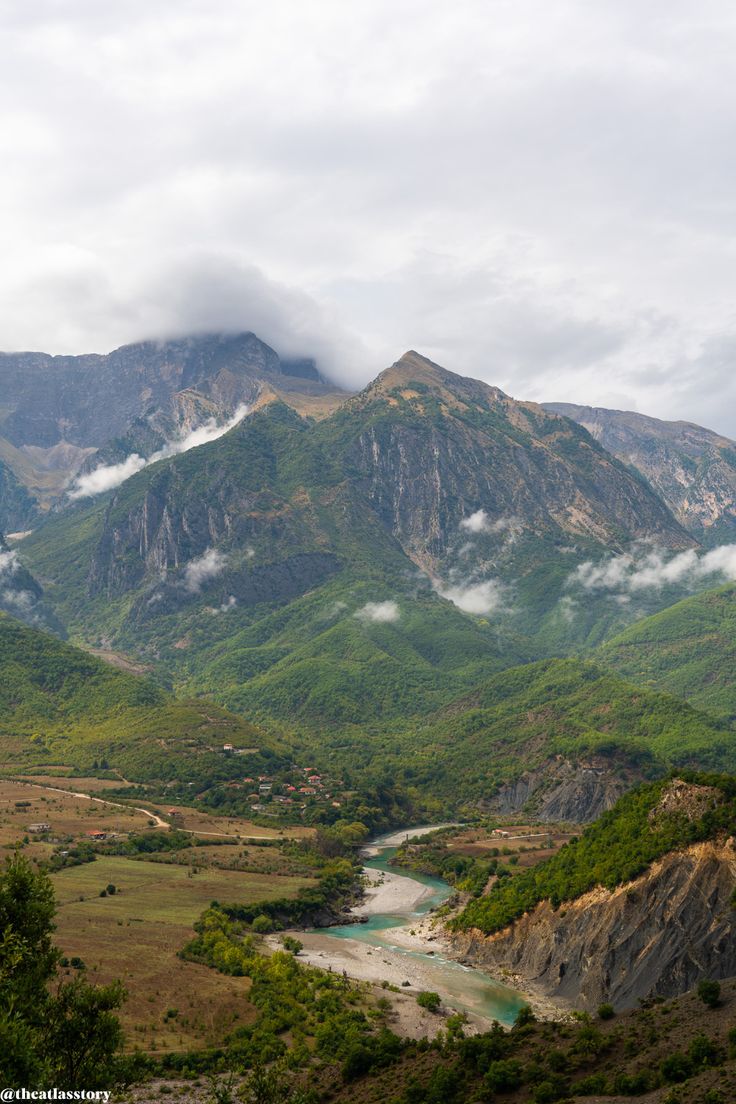
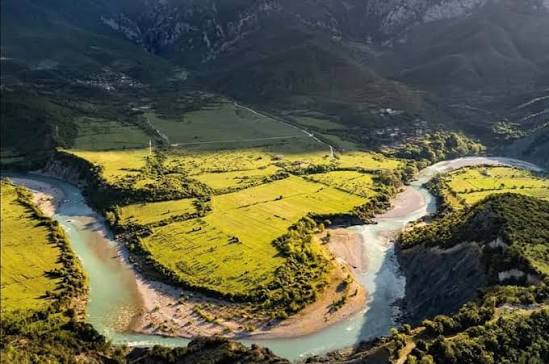
Near the beginning of its Albanian journey, the river passes through narrower valleys and dramatic mountain scenery. Further downstream it becomes broader and increasingly braided before eventually interacting with wetlands and coastal habitats.
Albania’s official tourism authority describes the complete river as approximately 272 kilometres long, moving from mountain canyons through branching channels and floodplain habitats before reaching the Adriatic.
Few European rivers of this scale still display such a wide range of natural river processes.
The Vjosa Is a Wildlife Corridor
Protecting a free-flowing river is not simply about protecting water.
The river connects an enormous number of habitats.
Fish use different sections of the river system during their life cycles. Birds feed and nest around wetlands, gravel islands and forests. Amphibians depend on smaller pools and tributaries. Mammals move through river valleys and riparian woodland.
IUCN has recorded more than 1,100 animal species associated with the Vjosa river and floodplain, including species considered globally threatened.
The wider Vjosa Valley UNESCO Biosphere Reserve records more than 1,600 species and includes important wildlife such as the Egyptian vulture, Dalmatian pelican, European eel, Albanian water frog and several rare fish and plant species.
The important part is not simply the number of species.
It is the diversity of habitats available to them.
A narrow mountain gorge provides different conditions from a gravel island. A riverside forest supports different wildlife from a coastal lagoon. Because the river continues changing naturally, those habitats remain connected within a functioning ecosystem.
2023 Changed the Future of the Vjosa
For years, environmental organisations, scientists and local campaigners pushed for stronger protection of the river.
One major concern was hydropower development.
The Balkans contain many rivers with hydroelectric potential, and dams had been proposed at different points within the Vjosa system. Conservationists argued that large-scale development could permanently alter one of Europe’s remaining free-flowing river landscapes.
A major decision arrived on 15 March 2023.
The Albanian government declared the Vjosa Wild River National Park, creating Europe’s first national park specifically designed around protecting a wild river.
The initial national park covered 12,727 hectares and approximately 190 kilometres of the Vjosa in Albania, alongside important sections of its tributary system. The designation follows IUCN Category II standards, intended to protect ecological processes as well as individual species and landscapes.
That distinction matters.
The goal is not simply to protect a particularly beautiful stretch of river.
It is to protect the river as a connected system.
Then Came UNESCO Recognition
Protection expanded in another direction in 2025 when UNESCO added the Vjosa Valley Biosphere Reserve to its Man and the Biosphere Programme.
The biosphere reserve covers approximately 330,986 hectares and extends well beyond the river channel itself.
A biosphere reserve works differently from a strictly protected national park.
It recognises that people live and work within the wider landscape. Towns, villages, agriculture, tourism and traditional livelihoods are all part of the Vjosa Valley.
The idea is to protect the most environmentally sensitive areas while encouraging sustainable economic activity in surrounding communities.
That is important because the Vjosa is not an empty wilderness.
People have lived beside it for generations.
Where Can You Experience the Vjosa?
You do not need to be an environmental scientist to understand why the Vjosa matters.
You can experience it directly.
Përmet
Përmet is probably the easiest base for travellers who want to combine the river with southern Albania’s mountains, food and outdoor activities.
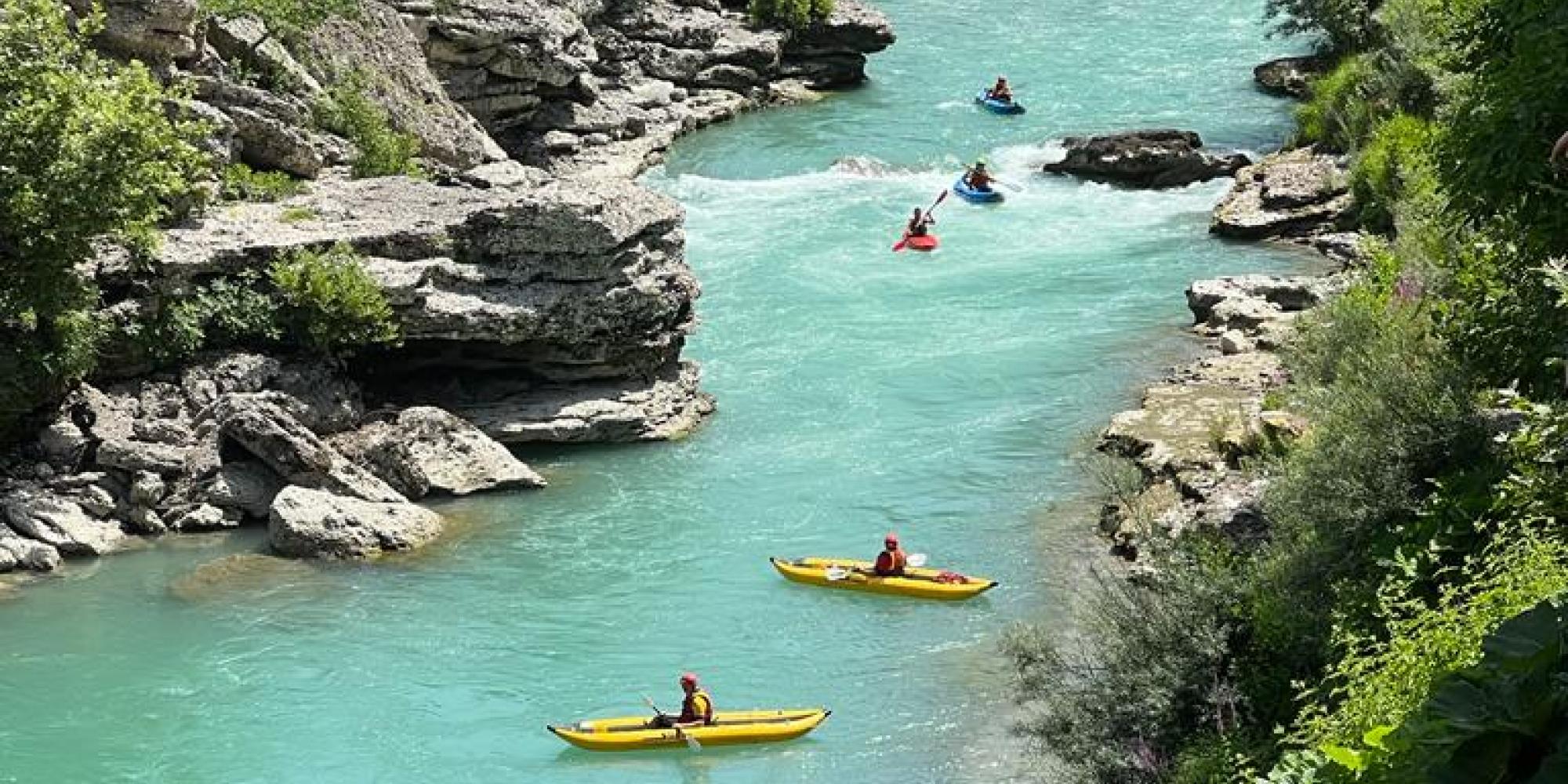
The surrounding stretch of the Vjosa is particularly popular for rafting and kayaking. Albania’s tourism authority lists the Vjosa among the country’s main rivers for both activities.
Përmet also works well as part of a wider road trip involving the thermal pools at Bënjë, Kadiut Bridge and the Lengarica Canyon.
Këlcyrë
Northwest of Përmet, Këlcyrë places you close to another dramatic section of the valley.
Here the mountain landscape becomes an important part of the experience, and travellers can combine river scenery with nearby villages, hiking and traditional food.
Tepelenë
Around Tepelenë, the river landscape changes again.
Several waterways meet within the wider area, and viewpoints around the valley demonstrate the scale of the Vjosa system far better than photographs usually do.
Travelling by car between Përmet and Tepelenë is one of the easiest ways to see how much the river changes along its route.
Rafting Is One of the Best Ways to Understand the River
For most visitors, rafting is treated as an adventure activity.
On the Vjosa, it is also a surprisingly good geography lesson.
From the road, you see only individual sections of the river.
From the water, you notice gravel banks, currents, vegetation, cliffs and changing channels. You start to understand what “free-flowing” actually looks like.
Conditions vary according to water levels and season, so trips should be organised through experienced local operators rather than attempted independently.
You do not need to be an extreme-sports traveller either. Operators offer different experiences depending on conditions and experience levels.
If rafting is not for you, hiking, wildlife watching and simply travelling through the valley still provide plenty of ways to explore the national park. Albania’s tourism authority also promotes kayaking, hiking and nature observation throughout the area.
So, Is It Really Europe's Last Wild River?
The phrase makes a good headline, but “one of Europe’s last great wild rivers“ is more accurate.
Other free-flowing rivers and river sections remain across Europe.
What makes the Vjosa exceptional is its scale, connectivity, natural river dynamics and the decision to protect the system through Europe’s first Wild River National Park.
Then came UNESCO recognition of the wider valley.
Together, those protections have turned the Vjosa into something bigger than an Albanian natural attraction.
It has become a European experiment in answering a difficult question:
Can we protect a river by allowing it to remain a river?
For now, the Vjosa still changes its channels, moves its gravel, floods its banks and makes its own way towards the Adriatic.
That is exactly what makes it wild.