

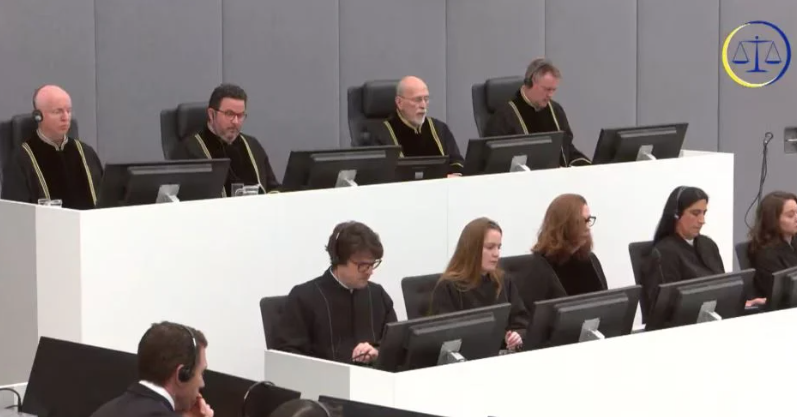
On September 16, 2026, thousands of people in Kosovo watched The Hague.
They were not simply waiting to hear how many years of imprisonment would be announced. For many, they were watching a courtroom pass judgment on men whose names are inseparable from one of the most painful and defining chapters of Kosovo’s modern history.
Hashim Thaçi, Kadri Veseli, Rexhep Selimi and Jakup Krasniqi — four former senior figures of the Kosovo Liberation Army (KLA/UÇK) — were found guilty by the Kosovo Specialist Chambers of war crimes including illegal or arbitrary detention, cruel treatment, torture and murder. Thaçi and Krasniqi were sentenced to 25 years in prison, Veseli to 18 years and Selimi to 13 years, with credit for time already served. The court acquitted them of the crimes-against-humanity charges after finding that prosecutors had not proved beyond reasonable doubt the existence of a widespread or systematic attack against a civilian population.
But outside the courtroom, the judgment immediately became about something much larger.
It became about memory.
About war.
About who gets to tell its story.
And, for many Albanians, about whether the international justice they were once asked to trust has treated Kosovo’s history fairly.
September 16 Was Never Going to Be Just Another Court Date
To understand the reaction in Kosovo, it is necessary to understand what the names on the defendants’ bench represent to many people.
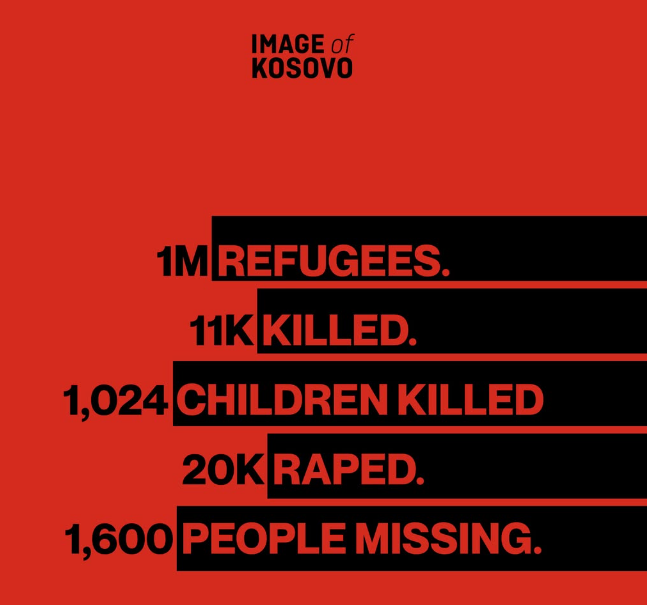
The KLA was born in a Kosovo marked by repression, political exclusion and an escalating conflict with Serbian and Yugoslav forces. By 1998 and 1999, the conflict had developed into a humanitarian catastrophe.
Hundreds of thousands were forced from their homes. UNHCR reported that by April 7, 1999 alone, more than 621,000 people had fled Kosovo since the unrest began in March 1998 — almost 300,000 of them seeking refuge in Albania.
Behind those numbers were families.
People crossing mountains and borders. Homes left behind. Parents searching for children. Villages emptied. Civilians killed. People who disappeared and never returned.
It was within that reality that the KLA grew from an armed resistance movement into one of the central forces of the Kosovo war.
That history explains why, for a large part of Kosovo Albanian society, the UÇK is not remembered first through court files or indictments. It is associated with resistance and the struggle that preceded Kosovo’s liberation in 1999 and eventual declaration of independence in 2008.
And this is precisely why September 16 struck such a nerve.
Four Men Were on Trial. For Many Kosovars, Their History Felt as Though It Was Too.
The Specialist Chambers insist on an important distinction.
The prosecution said the proceedings concerned individual criminal responsibility, not the historical legitimacy of the KLA or Kosovo’s struggle. The Specialist Prosecutor reiterated after the verdict that the case was about holding specific individuals responsible for their actions and that it did not seek to challenge a historical narrative.
Legally, that distinction is fundamental.
Emotionally and historically, however, many Kosovars do not experience the case so narrowly.
The four defendants were not obscure participants in the conflict. They became some of the most recognisable political and military figures associated with the KLA and post-war Kosovo. Thaçi later served as prime minister and president of Kosovo; all four occupied prominent places in the country’s political or institutional life.
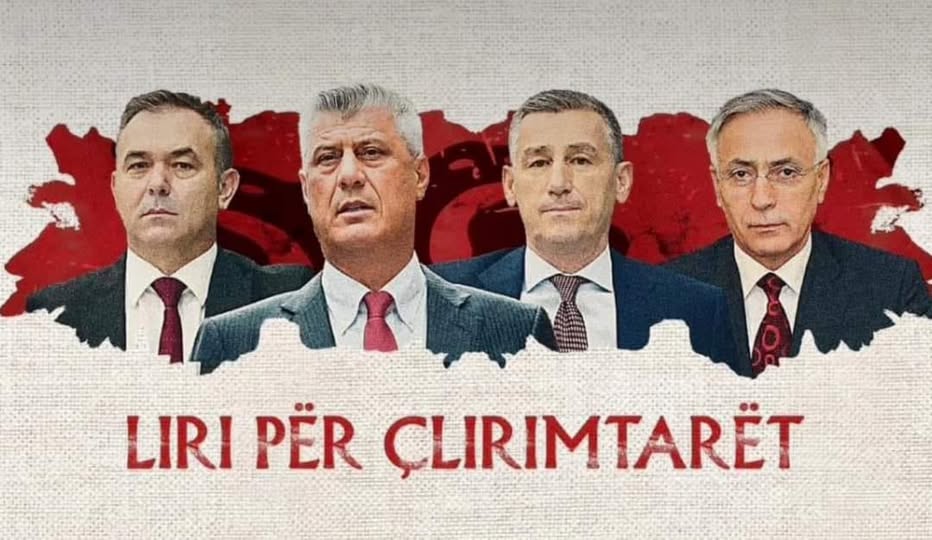
Their trial began in April 2023 after they had been in detention in The Hague since November 2020. The proceedings ultimately involved 134 witnesses and 156 participating victims before the evidentiary phase closed in December 2025.
So when the sentences were pronounced on September 16, many people did not hear only the judgment against four individuals.
They heard something touching a much larger story — their story.
That reaction was visible almost immediately. Supporters gathered in Prishtina and The Hague, while anger over the judgment led to demonstrations in Kosovo. Reuters reported widespread criticism among supporters of the former KLA leaders following the decision.
Why Many Albanians Are Asking: Where Was This Justice Before?
This is perhaps the question at the heart of the anger.
It is not necessarily a demand that crimes committed by Albanians should be ignored. Nor does recognising Kosovo Albanian suffering determine whether any individual defendant is legally responsible for a particular crime.
The deeper criticism concerns the perceived imbalance in the historical experience of international justice.
For families who spent the war fleeing Serbian forces, burying relatives or searching for missing family members, watching former KLA leaders receive lengthy prison sentences inevitably brings back another question: has justice been experienced equally by all of the victims of the Kosovo war?
That question cannot be answered by pretending crimes against civilians did not occur on different sides of the conflict.
But neither can Kosovo’s history be understood without remembering the scale of displacement and violence that shaped the lives of Kosovo Albanians.
This is where the slogan “Europe Has Failed to Serve Justice” finds its meaning among those protesting the verdict.
It is not the wording of the court’s judgment. It is a political and emotional response to it.
For people who hold this view, the frustration comes from seeing the leaders of the force they associate with liberation sitting in a courtroom in The Hague decades later, while believing that many crimes committed against their own communities never received equivalent accountability.
Others strongly reject that interpretation. The Specialist Prosecutor described the September 16 convictions as important for the rule of law and as long-delayed justice for victims, arguing that political or military rank cannot place an individual beyond criminal accountability.
Those two understandings of justice now collide directly.
The KLA Is More Than Four Names
There is another distinction that risks disappearing in the intensity of the debate.
Thaçi, Veseli, Selimi and Krasniqi are individuals.
The KLA was an entire movement involving thousands of people, emerging from communities across Kosovo during a particular historical moment.
Its members came from towns and villages, from families that had experienced repression, and from a society whose political future had become increasingly uncertain.
Whatever happens to four former leaders in The Hague cannot transform every person who wore the KLA insignia into a defendant.
Nor did the September 16 judgment legally do that.
The court ruled on specific alleged conduct and individual responsibility. Indeed, it acquitted the defendants on several allegations and on the six counts of crimes against humanity because the required legal threshold had not been established beyond reasonable doubt.
That distinction matters because public memory rarely operates with the precision of criminal law.
A verdict can determine criminal responsibility.
It cannot, by itself, determine the meaning of an entire liberation movement to a society.
Three Letters That Changed Kosovo’s History
UÇK.
Three letters that still carry extraordinary weight in Kosovo.
They appear on memorials, photographs and uniforms preserved by families. They are connected to people who never returned home and to a generation that lived through a war rather than reading about one.
For some, the KLA represents sacrifice and resistance. For victims of crimes attributed to KLA members and their families, that same period can carry a profoundly different memory.
Both realities form part of the historical record.
Justice therefore becomes most credible when it can confront individual crimes without turning collective identities into guilt — and when every community can believe that its victims matter equally.
That is precisely why the debate triggered by September 16 will not disappear when the courtroom doors close.
Kosovo Will Remember September 16, 2026
History rarely fits neatly inside a judgment.
A courtroom asks specific questions: What happened? Who was responsible? What evidence proves it? Does that evidence meet the required legal standard?
A nation asks different ones.
What happened to us?
What did we survive?
Who remembers those we lost?
And was justice equal?
On September 16, 2026, the Kosovo Specialist Chambers gave its answers to the legal questions before it. It convicted four former KLA leaders and imposed lengthy prison sentences.
But it could not answer all the questions that Kosovars carry from the war.
That is why the reaction has been so powerful.
For those who regard the judgment as accountability for victims, September 16 represents the principle that no wartime actor stands above the law. For many Albanians who reject the outcome, it represents something very different: another moment in which they believe Europe failed to understand the full weight of Kosovo’s history.
The legal record and collective memory are not the same thing.
The verdict will remain part of Kosovo’s history. But it will never be the whole of it.
The suffering of civilians cannot be erased. Individual crimes cannot be excused by a national cause. And the history of a people’s struggle for freedom cannot be reduced to the verdict against four men.
September 16, 2026, will be remembered precisely because all of these truths now stand together — painfully, controversially and unresolved.