

If you’ve ever looked at a map of Europe and paused somewhere between Italy and Greece wondering, “Where exactly is Albania?” — you’re not alone. Albania is one of Europe’s most fascinating yet least understood countries. Small in size but rich in diversity, it sits in a location that quietly connects worlds: East and West, mountains and sea, ancient empires and modern Europe.
Let’s break it down clearly and simply.
Albania on the Map: The Big Picture
Albania is located in Southeastern Europe, on the Balkan Peninsula. It lies along the western edge of the Balkans, facing the Adriatic and Ionian Seas.
To understand its position easily:
- It is directly across the sea from Italy.
- It sits north of Greece.
- It is south of Montenegro.
It borders Kosovo and North Macedonia to the east.
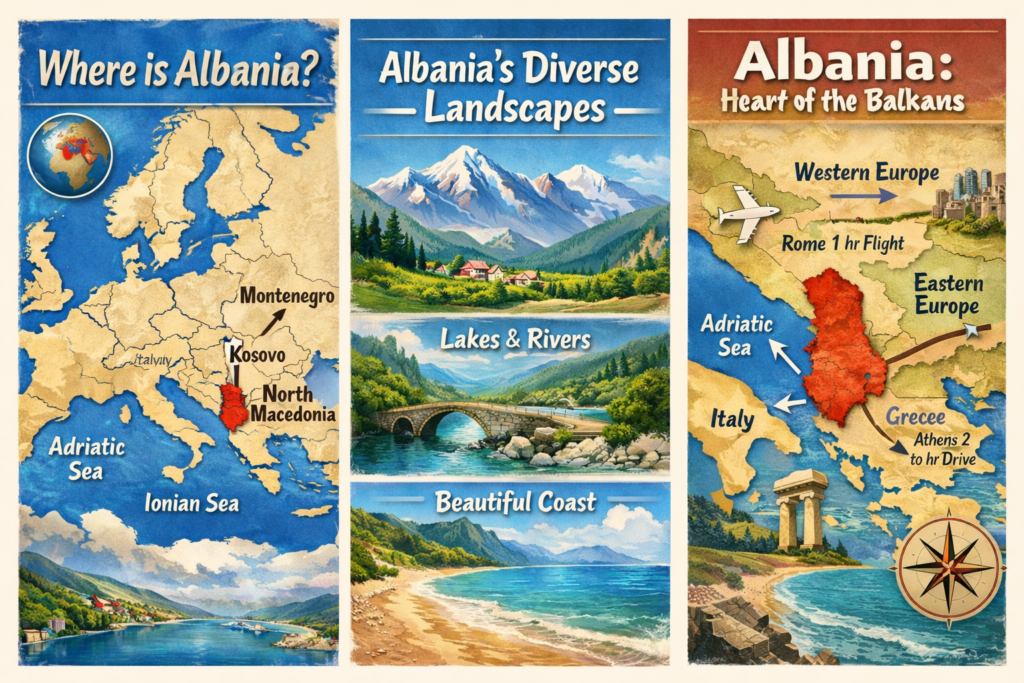
If you fly from Rome, you reach Albania in less than an hour. That’s how close it is to Western Europe — yet culturally and geographically, it offers something entirely different.
Its capital city, Tirana, lies almost in the center-west of the country, not far from the coast.
Albania’s Neighbors
Albania shares land borders with four countries:
- Montenegro (northwest)
- Kosovo (northeast)
- North Macedonia (east)
- Greece (south and southeast)
Across the sea to the west lies Italy, separated by the Adriatic Sea at its narrowest point by about 72 kilometers.
This positioning makes Albania a natural bridge between Central Europe and the Mediterranean world. Historically, it has been influenced by Roman, Byzantine, Ottoman, and Venetian civilizations — all because of where it sits geographically.
How Big Is Albania?
Albania covers around 28,748 square kilometers, making it smaller than countries like Belgium or the Netherlands.
To visualize its size:
- You can drive from north to south in about 5–6 hours.
- From east to west, it takes roughly 2–3 hours.
But what makes Albania special is not its size — it’s the dramatic variation within those borders.
A Country of Mountains
About 70% of Albania is mountainous.
In the north rise the dramatic Albanian Alps, locally called the Accursed Mountains. These peaks form part of a larger mountain chain that extends into Montenegro and Kosovo. The area around Theth and Valbona Valley feels closer to the Swiss Alps than what most people imagine when thinking of the Mediterranean.
The highest point in the country is Mount Korab, standing at 2,764 meters, located along the border with North Macedonia.
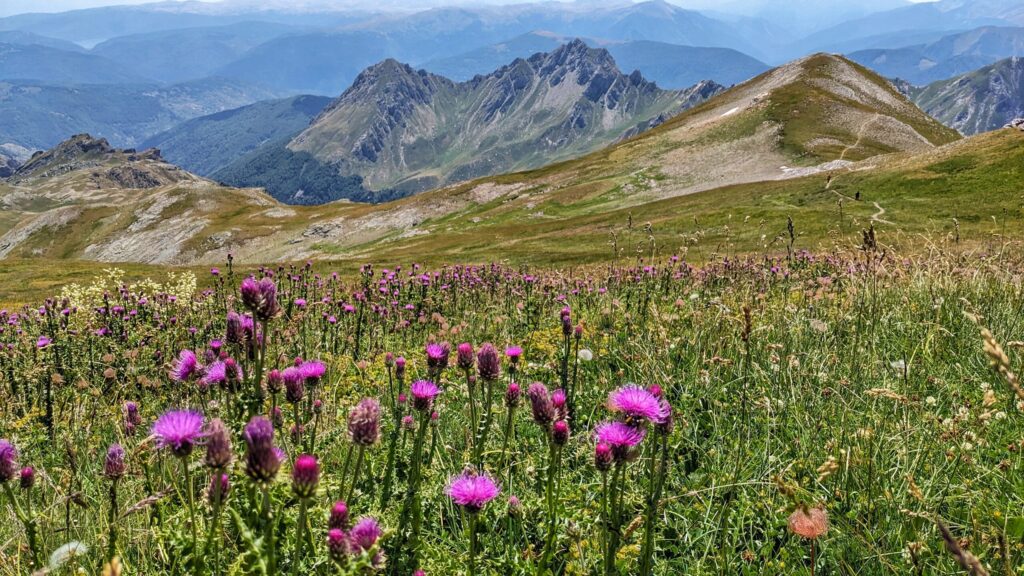
The mountains shape everything:
- Climate
- Rivers
- Villages
- Traditions
- Even road infrastructure
Albania’s geography has historically kept communities somewhat isolated, which is why regional identities remain strong.
Two Seas, One Coastline
Albania has around 450 kilometers of coastline, touching two seas:
- The Adriatic Sea (north and central coast)
- The Ionian Sea (south coast)
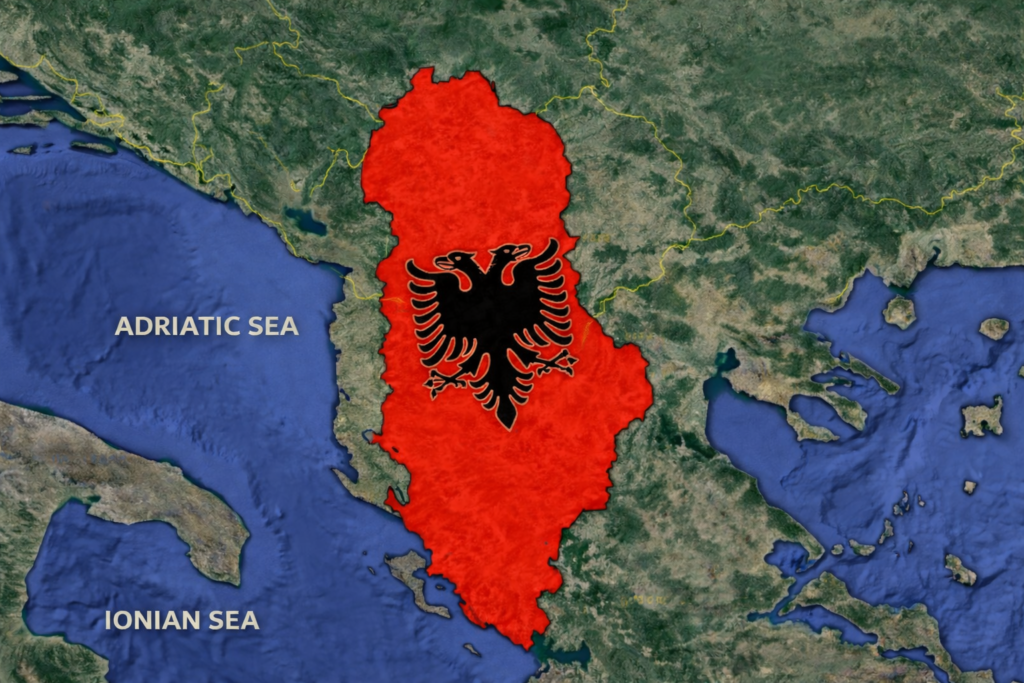
The Adriatic side features:
- Long sandy beaches
- Shallow waters
- Lagoon ecosystems
The Ionian side — often called the Albanian Riviera — offers:
- Crystal-clear turquoise water
- Rocky cliffs
- Hidden coves
- Dramatic mountain-meets-sea scenery
Cities like Durrës and Vlorë sit along the Adriatic, while the Riviera stretches south toward the Greek border.
Because Albania faces west, sunsets over the sea are a daily spectacle.
Rivers, Lakes, and Hidden Geography
Albania is one of the most water-rich countries in Europe.
Major rivers include:
- Drin (the longest river)
- Vjosa (one of Europe’s last wild rivers)
- Shkumbin (in the image)
- Seman
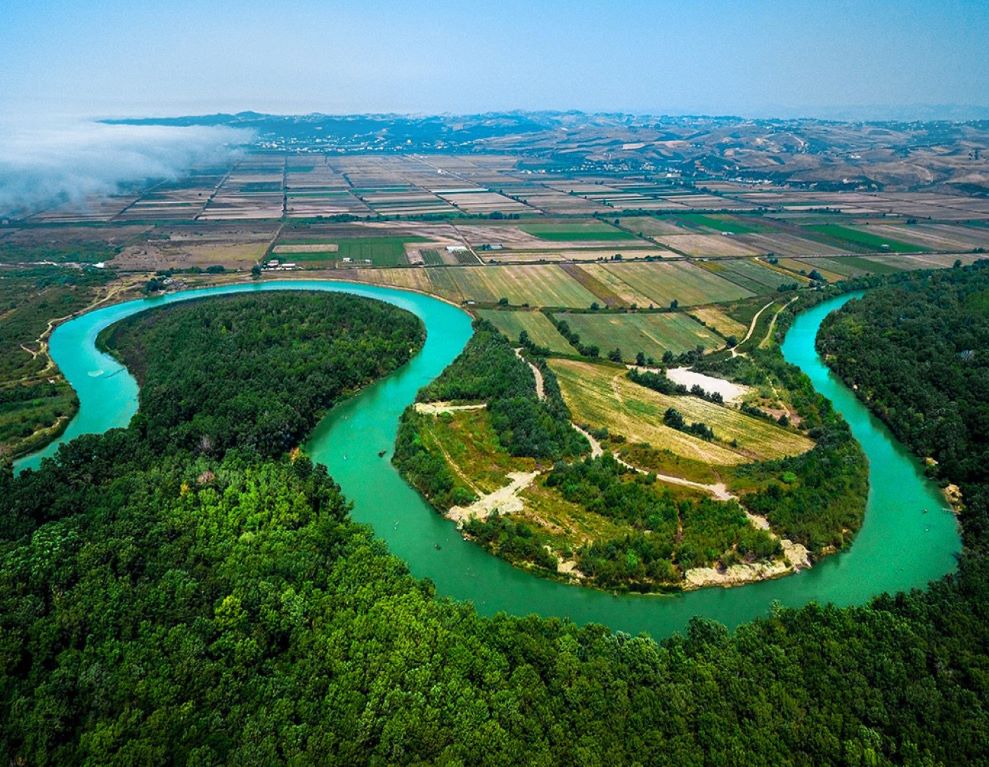
In fact, the Vjosa River has recently gained international attention for being declared a national park — one of Europe’s first wild river national parks.
The well-known actor Leonardo di Caprio has welcomed the Albanian government’s decision to declare the Vjosa river a National Park. DiCaprio is one of the most powerful voices who has campaigned for the protection of the Vjosa River and its declaration as a national park.
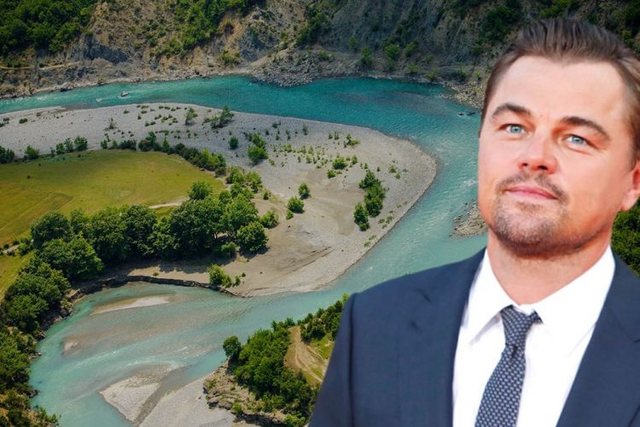
Text borrowed from Vox News: Through a post on his social network, Instagram, the well-known actor writes that now Vjosa will be free forever and will be an asset that we will leave to future generations.
“Today, history has been made. Cooperation between the Albanian government, civil society and business has created the first Wild River National Park in Europe. The Vjosa River will flow free forever, from source to sea, for future generations to enjoy. A new vision for global water conservation is here. Congratulations to all who made this amazing effort a reality,” writes actor Leonardo di Caprio.
The country also shares important lakes:
- Lake Shkodër (with Montenegro)
- Lake Ohrid (with North Macedonia)
- Prespa Lakes (with Greece and North Macedonia)
These lakes are among the oldest in Europe, especially Lake Ohrid, known for its unique biodiversity.
Climate: Why Albania Feels So Different
Albania’s location between mountains and sea creates surprising climate diversity.
- Coastal areas have a classic Mediterranean climate: hot, dry summers and mild winters.
- Mountain regions experience cold winters with heavy snowfall.
- Inland valleys can get very hot in summer.
You can swim in the sea in the morning and hike snowy mountains the same week, depending on the season.
This mix is rare in such a small country.
Albania’s Strategic Location in Europe
Geographically, Albania sits at a crossroads:
- It connects the Adriatic to the Balkans.
- It links Southern Europe to Eastern Europe.
- It historically connected maritime trade routes with inland caravan paths.
During ancient times, Roman roads like Via Egnatia passed through this region, linking the Adriatic coast to Constantinople.
Its coastal proximity to Italy made it strategically important during World War II and throughout the Cold War era.
Even today, Albania’s ports and geographic position give it growing relevance in regional transport corridors.
Why People Often Don’t Know Where Albania Is
Despite its strong geographical identity, Albania remained relatively isolated during much of the 20th century. For decades, it was one of Europe’s most closed countries, which limited tourism and international visibility.
Only in recent years has it become more recognized as travelers begin to explore beyond mainstream destinations.
Ironically, its relative obscurity is now part of its charm.
The Landscape Diversity That Surprises Visitors
In one country, you’ll find:
- Snowy alpine peaks
- Deep canyons
- Mediterranean beaches
- Olive groves
- River valleys
- UNESCO heritage towns
- Archaeological ruins
Few European countries pack so much variation into such a compact area.
And because distances are short, travelers can experience several completely different landscapes within a single week.
Albania in the Balkan Context
The Balkan Peninsula is often described as complex — culturally and geographically. Albania lies on its western side, acting as a kind of gateway between the interior Balkans and the Mediterranean Sea.
This position shaped its culture:
- Mediterranean influences in cuisine
- Balkan traditions in music and folklore
- Mountain-based clan systems historically
- Coastal trade communities
Geography influenced identity.
So, Where Is Albania - In Simple Terms?
If we simplify everything:
Albania is a small Southeastern European country on the western Balkan Peninsula, between Montenegro and Greece, across the sea from Italy, with mountains covering most of its territory and two stunning coastlines along the Adriatic and Ionian Seas. But that simple description doesn’t capture its depth.
Albania sits in a place where:
- Mountains meet turquoise water
- Ancient roads cross modern borders
- Europe feels both familiar and unexpected
Albania’s geography explains why it feels like a hidden gem:
- It’s close to Western Europe but less crowded.
- It offers alpine and Mediterranean landscapes in one destination.
- It connects cultures historically and geographically.
- It remains relatively undiscovered compared to neighbors like Greece or Italy.
Its position makes it accessible — yet still authentic.
Conclusion
The next time someone asks, “Where is Albania?” you can answer confidently:
It’s in Southeastern Europe, on the Balkan Peninsula, between mountains and sea — and exactly where adventure, history, and natural beauty quietly meet.
Understanding Albania’s geography isn’t just about knowing where it sits on a map. It’s about recognizing how location shapes identity, culture, climate, and experience.
And sometimes, the most interesting places are the ones people are still discovering.